Precolumbian Art - South America
South America includes Colombia, Venezuela, Ecuador, Peru, Bolivia, and Argentina
In pre-Columbian Colombia, the principal archaeological cultural phases are Calima, Sinu, Chibcha, Quimbaya, San Agustin, Tairona, Cauca, Nariño, Muisca, Tumaco, and Inca.
In Pre-Columbian Ecuador, the principal archaeological cultural phases include Las Vegas, Valdivia, Machalilla, Cotocollao, Chorrera, Narrio, La Tolita, Guangala, Jamacoaque, Jambeli, Capuli, Bahia, Puruha, Cuasmal, Manteno, Huancavilca, Milagro – Quevedo, Atacames, Canari, and Inca.
In Pre-Columbian Peru, the principal archaeological cultural phases are Chavin, Huari/Wari, Paracas, Vicus, Recuay, Nazca, Salinar, Mochica/Moche, Tiahuanaco/Tiwanaku, Chimu, Ica, Chancay, and Inca.
In Pre-Columbian Bolivia, the principal archaeological cultural phases are Chiripa, Yaya-Mama, Tiahuanaco/Tiwanaku, Huari/Wari, Moxos, and Inca.
In pre-Columbian Argentina, the principal archaeological cultural phase is Condorhuasi-Alamito.
Within this expanse of South American history, visitors will find a fascinating display of Pre-Columbian artistry. The collection will feature pottery that showcases intricate sculptured designs and practical forms, stone artifacts carved with symbolic meanings and used for ceremonial or everyday purposes, metal implements, and wooden pieces that highlight the craftsmanship and resourcefulness of the ancient inhabitants. Additionally, textile works will be displayed, revealing the complex weaving techniques and vibrant patterns that convey cultural identity and tradition. This rich array of artifacts aims to immerse viewers in the depth of South America’s cultural heritage, celebrating the artistry and enduring legacy of its ancient civilizations.

Manteño Stone Mortar with Parrots
Manteño serpentine stone mortar from Ecuador, ca. 800-1500 AD, featuring deeply incised parrot motifs and ancient sediment deposits.
More Info / Inquire
Tiwanaku Silver Tupu Pin Zoomorphic Finial
Intricate Details and Artistic Narrative of this Tiwanaku/Wari Silver Tupu A refined and historically significant Pre-Columbian silver tupu from the Tiwanaku / Wari culture, dating approximately to 400 to 1100 AD. This elegant Andean shawl pin exemplifies the restrained sophistication and symbolic design language associated with highland Peru and Bolivia during the Middle Horizon period. The piece features a long, tapering pin shaft culminating in a flat, circular finial. At the top of the disc are two outward-facing zoomorphic figures, rendered in symmetrical profile. These creatures, possibly stylized felines or abstract ungulates, display incised linear detailing along their bodies, evoking scale-like or textile-inspired patterning. The composition is balanced and deliberate, reflecting both artistic control and cultural meaning tied to status, identity, and adornment. Unlike gold examples reserved for elite use, silver tupu pins such as this were also valued within Andean society and worn as functional yet symbolic garments fasteners. The form remains one of the most recognizable and enduring types within Pre-Columbian metalwork traditions, bridging utility and visual expression. The surface presents a stable, aged patina consistent with antiquity, enhancing the sculptural qualities of the finial while preserving fine details. The pin remains structurally intact, with a smooth […]
More Info / Inquire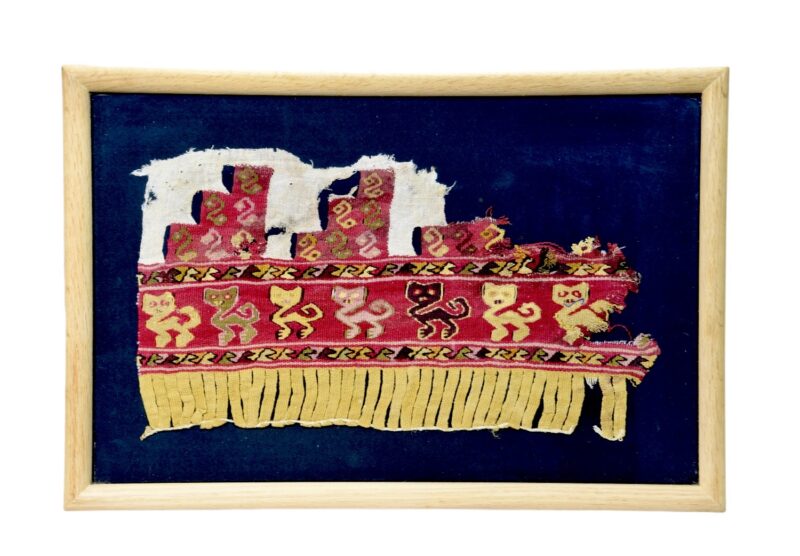
Chancay Textile Fragment – Pre-Columbian Peruvian Weaving
Pre-columbian Chancay textile fragment from ancient Peru, featuring step patterns with serpents, feline motifs, and wave designs. Cotton, 14” x 7.5”, framed
More Info / Inquire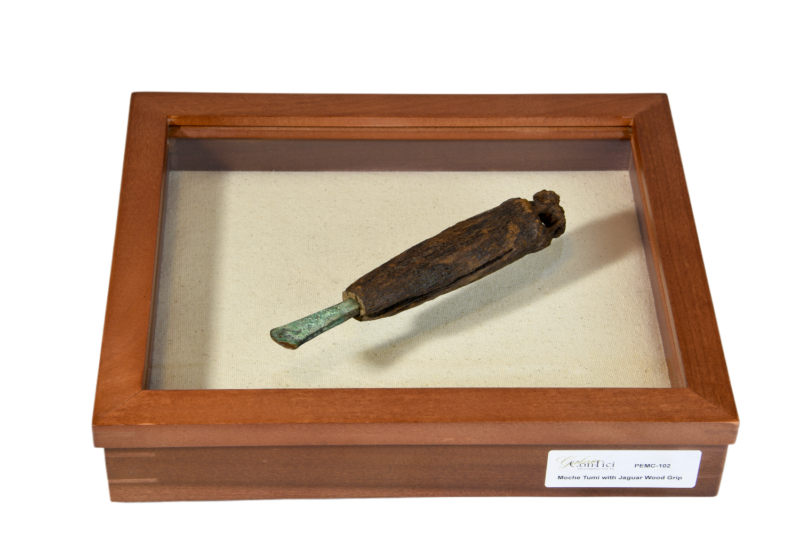
Moche Copper Tumi with Zoomorphic Jaguar Wood Handle
Exceptionally rare Moche copper tumi with original zoomorphic jaguar handle, 200-700 AD. Intact but aged wooden grip and vibrant patina highlight its rarity
More Info / Inquire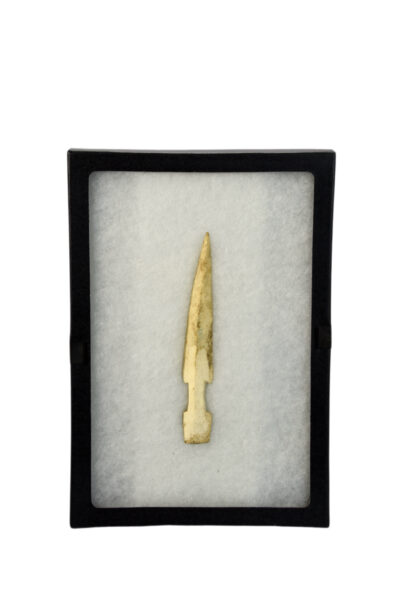
Kawesqar Bone Harpoon Tip – Tierra del Fuego, Patagonia
Rare Kawesqar bone harpoon tip from Tierra del Fuego, Patagonia. Likely from the 18th or 19th century, this 6.75” artifact reflects the seafaring traditions
More Info / Inquire
Aymara “Tinka” Ceremonial Marriage Bowl
Aymara Tinka ceremonial marriage chicha drinking bowl with yoked animals, symbolizing unity and reciprocity. Excellent provenance, and ties to Andean rituals.
More Info / Inquire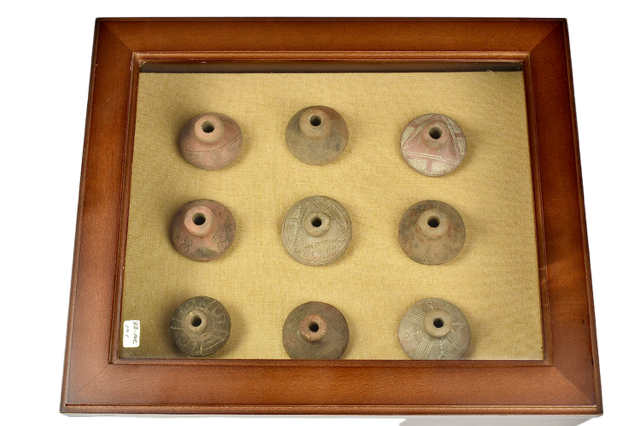
Exceptional Large Quimbaya Clay Spindle Whorls
Discover nine large Quimbaya clay spindle whorls from 1000-1400 A.D., featuring intricate designs and historical significance.
More Info / Inquire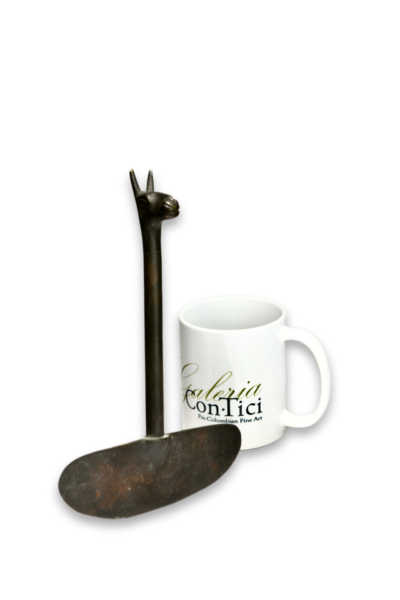
Inca Tumi, Peru, ca. 1400-1500 AD – Copper Knife, Llama
Explore this large Inca copper tumi, dating from ca. 1400-1500 AD, with a llama finial and rich patina. It is an authentic pre-Columbian artifact embodying Inca
More Info / Inquire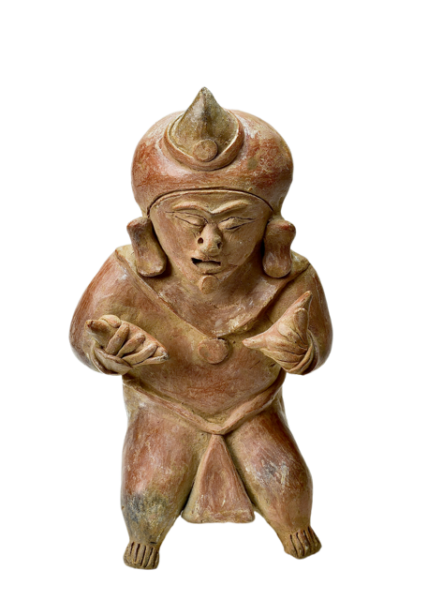
A Fine Jamacoaque Sitting Figure
Jamacoaque hollow terracotta figure, Ecuador, 500 BC - 500 AD. Seated on buttocks, holding manioc tubers, wearing a helmet with a horn-like point and a labret.
More Info / Inquire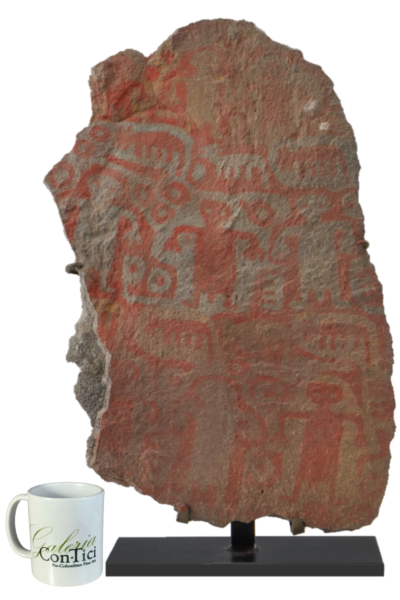
Antimpampa Painted Stone Tablet c. 3800 – 2200 BP
This gray volcanic stone is painted monochrome red in the Antimpampa style. The prominent motifs are anthropomorphous and zoomorphic figures.
More Info / Inquire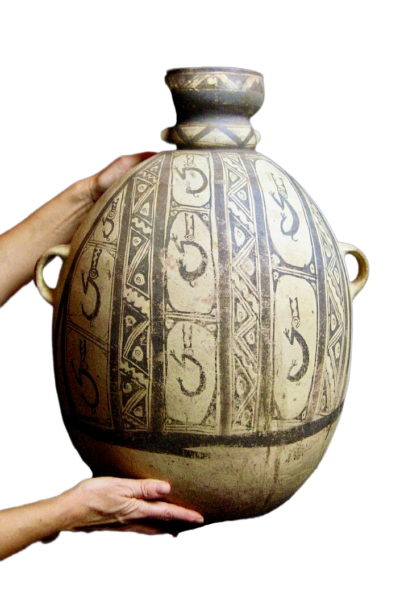
Chancay Crocodilian Vessel
It is a gorgeous Chancay vessel of substantial size. Black-on-white paint patterns throughout the front, back, neck, and looped handles. Solid zigzag nested...
More Info / Inquire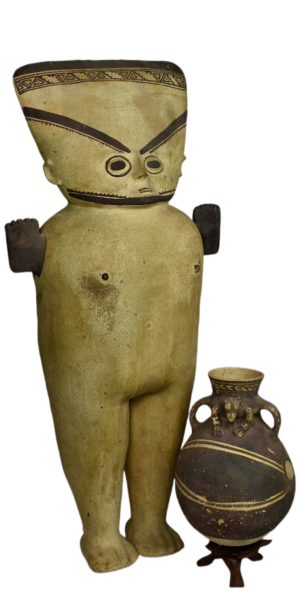
Chancay Female Cuchimilco
A large Chancay Cuchimilco Female Figure is a notable piece of pre-Columbian art. This creation is of hollowed ceramic earthenware, and the body form and iron
More Info / Inquire