Precolumbian Art - Mesoamerica
Mesoamerica includes Mexico and the Mayan Territories
The major archaeological cultural phases in Pre-Columbian Mexico include Olmec, Monte Alto, Monte Albán, Maya, Teotihuacan, Michoacan, Zapotec, Jalisco, Nayarit, Colima, Mezcala, Chupicuaro, Veracruz, Tarascan, Mixtec, Tula, Toltec, Casas Grande, and Aztec.
The Maya civilization area is divided into three zones: northern lowlands, southern lowlands, and highlands, encompassing present-day countries such as southern Mexico, the Yucatan Peninsula, Belize, Guatemala, western Honduras, and northern El Salvador.
Within this cultural landscape, an exquisite array of Pre-Columbian artistry awaits. Visitors will have the opportunity to view and appreciate a distinguished collection that includes pottery imbued with centuries-old craftsmanship and intricately carved stone artifacts that evoke the region’s profound spiritual and ceremonial practices. This curated selection aims to connect viewers with the depth and diversity of Mesoamerican heritage, celebrating the enduring legacy of its people and their unparalleled artistic achievements.

Large Mezcala Stone Temple Sculpture
Intricate Details and Artistic Narrative of this Mezcala Stone Temple This large and finely carved Mezcala stone sculpture, measuring over 9 inches in height, represents a ceremonial architectural form executed in dense gray, slate-like stone. The composition depicts a stepped structure with a pronounced central staircase rising to a four-columned temple façade. Within the columned space stands a stylized anthropomorphic figure, while a second figure is positioned at the apex of the structure, reinforcing the vertical hierarchy that defines elite Mezcala architectural imagery. The surface retains attractive mineral encrustations consistent with long burial. Clear, ancient breaks are visible at the upper and lower sections of each pillar and at the internal standing figure. These elements were professionally reassembled and stabilized, with join lines intentionally left visible in keeping with conservation standards and to avoid speculative restoration. This transparent approach is favored by advanced collectors and institutional audiences and allows the object’s full archaeological history to remain legible. Architectural sculptures of this scale and complexity rank among the most desirable categories of Mezcala stone carving, combining abstraction with structural clarity and symbolic presence. The survival of multiple figural components, together with the sculpture’s substantial size, places this example well above […]
More Info / Inquire
Monumental Mezcala Axe God Figure, M10 Type, Guerrero
Intricate Details and Artistic Narrative of this Mezcala Guerrero Axe God This exceptional and commanding Pre-Columbian Mezcala stone carving from ancient Guerrero dates to approximately 300–100 BCE. This rare, large-format figure—identified as Type M10 in Carlo Gay’s definitive typology—stands as one of the most architecturally refined and abstract expressions of the revered Mezcala sculptural tradition. Hewn from Andesite, a dense, green-gray stone with superb balance and precision, the figure towers 18 inches tall (18.8 inches on its custom museum-quality mount), placing it among the largest and most powerful examples to appear on the market. Its design is bold, deliberate, and minimal. The trapezoidal head is defined by sharply cut cheek lines, a dramatically projecting brow ridge, and a central groove forming a prominent nose. Recessed eyes sit beneath the monobrow, while the mouth is rendered with only the slightest shaping—an approach typical of M10 Mezcala sculpture, where austerity reflects spiritual intent and geometric discipline. The squared shoulders and block-like torso contribute to the figure’s imposing presence, while the arms, subtly implied as folded across the waist, remain subordinate to the whole. A pronounced vertical cleft between the legs animates the otherwise static pose with an elemental force, suggesting rootedness […]
More Info / Inquire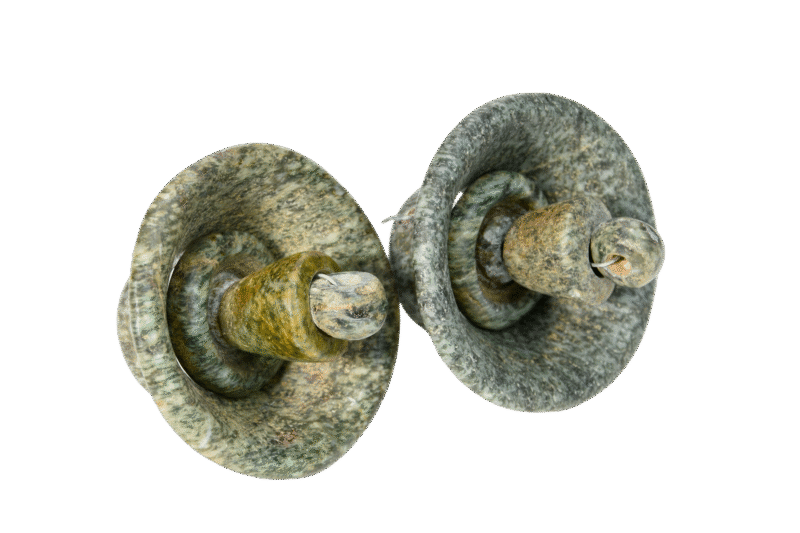
Maya Serpentine Earflare Assemblages
Intricate Details and Artistic Narrative of these Maya Earflare Assemblages A rare and exceptional pair of Late Classic Maya earflare assemblages, dated to circa 600–900 AD, carved from marbleized green serpentine with pale green, grey, and white veining. Measuring just over 2 inches in diameter, each assemblage is composed of multiple finely carved elements: a flanged, openwork disc with twin lateral perforations for suspended attachments, and a central drilled aperture housing a cylindrical earflare insert. These multipart forms exemplify the technical sophistication of Maya lapidary tradition and are closely associated with elite ceremonial regalia worn in public display, ritual performance, or courtly life. The radial composition of the openwork discs reflects Classic Maya ideals of visual order and cosmic symmetry. The petal-like form suggests an abstracted floral motif, a design language often tied to fertility, dynastic legitimacy, and celestial renewal. Serpentine, a symbolically potent material in Mesoamerican cosmology, evoked life force, vegetation, and the sacred vitality of maize. The deliberate use of such material affirms the status of these earflare assemblages as high-status insignia. Despite the addition of modern stabilizing pins for secure display, the assemblages remain intact in their original ancient configuration. Comparable examples appear only rarely in […]
More Info / Inquire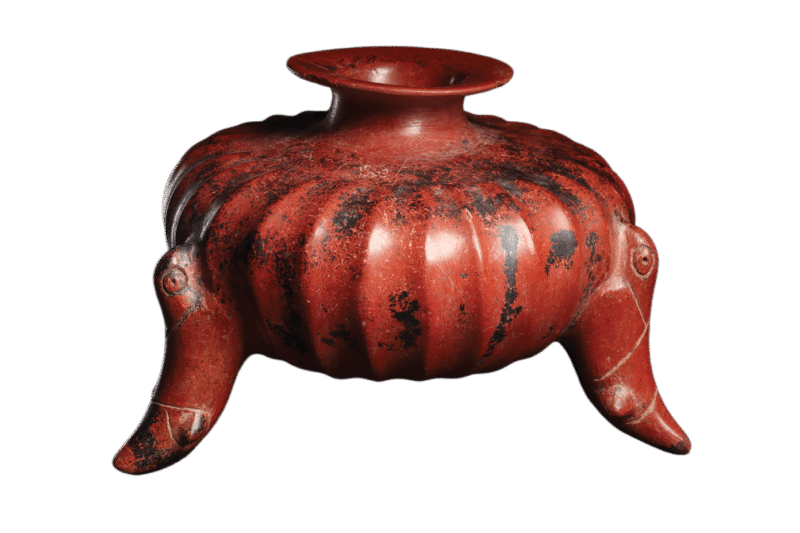
Large Colima Gadrooned Tripod Vessel with Parrot Form Legs
Large Colima gadrooned tripod vessel with parrot form legs, 200 BCE–300 CE. Fine redware, from West Mexico shaft tomb tradition. Rare Pre-Columbian art.
More Info / Inquire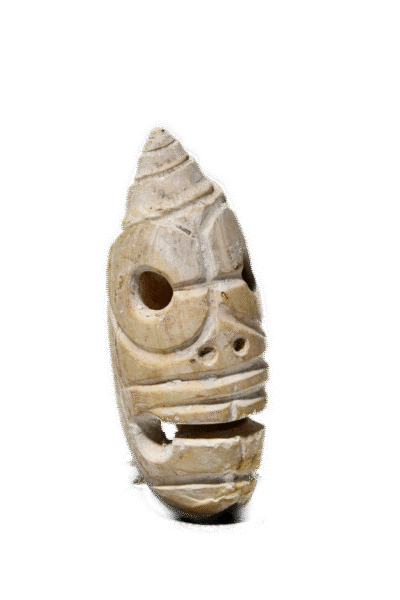
Rare Maya Olive Shell Skull Face Pendant
Pre-Columbian Maya pendant carved from olive shell with a skull motif, symbolic of death and the sea. Xibalba, Maya underworld. Late Classic, ca. 550–900 CE.
More Info / Inquire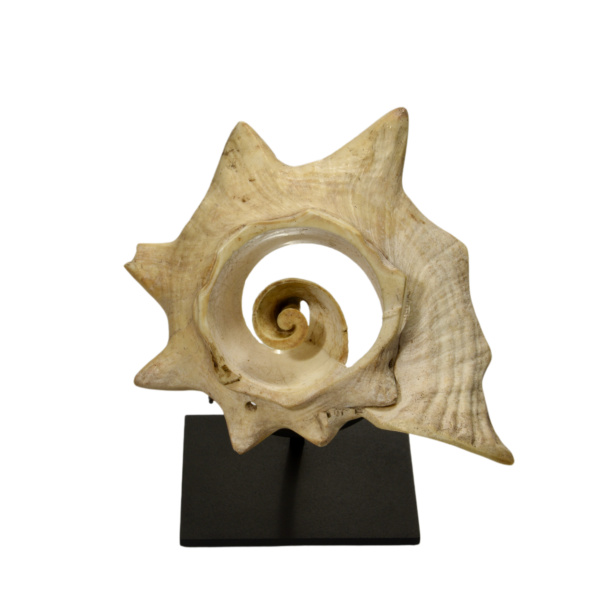
Aztec Carved Shell Ornament of Ehecatl
Striking carved shell ornament symbolizing Ehecatl Quetzalcoatl, Aztec wind deity. Powerful spiral form, ritual use. Ex. Dr. Heflin Collection.
More Info / Inquire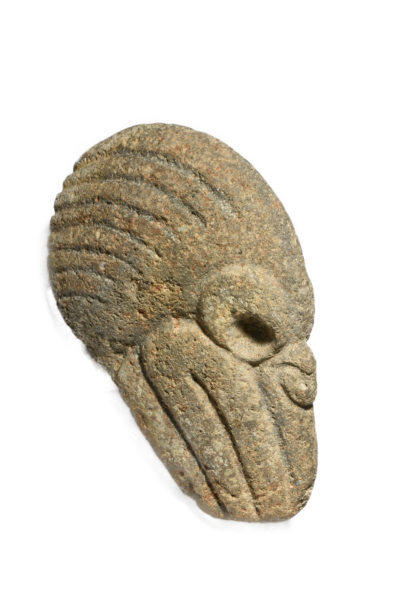
Veracruz Avian Stone Hacha – Volcanic Ritual Sculpture
Carved volcanic stone hacha from Veracruz with avian visage and crest. Classic form linked to Mesoamerican ritual performance and elite ceremonial display.
More Info / Inquire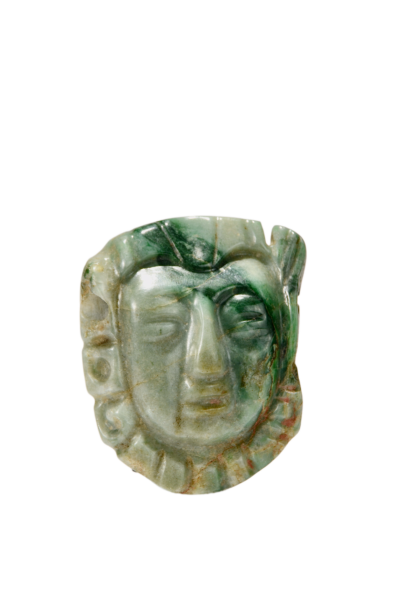
Rare Maya Jadeite Face Pendant with Red Pigment Traces
Authentic Maya jadeite face pendant with low-relief carving, youthful features, traces of red hematite and cinnabar, and intricate ceremonial designs.
More Info / Inquire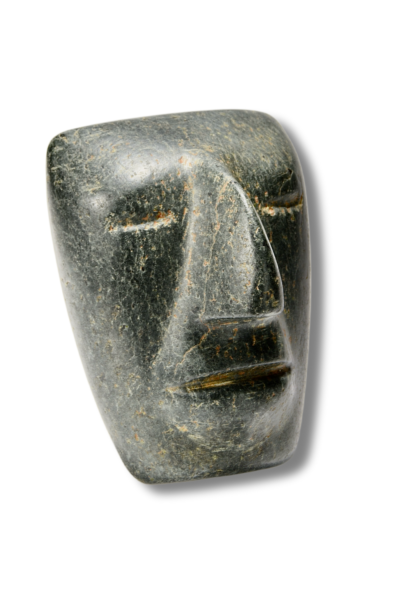
Ancient Sultepec Diorite Maskette
Discover this Sultepec stone maskette, an exceptional example of ancient Mesoamerican artistry. Carved from dark green diorite, features finely incised facial
More Info / Inquire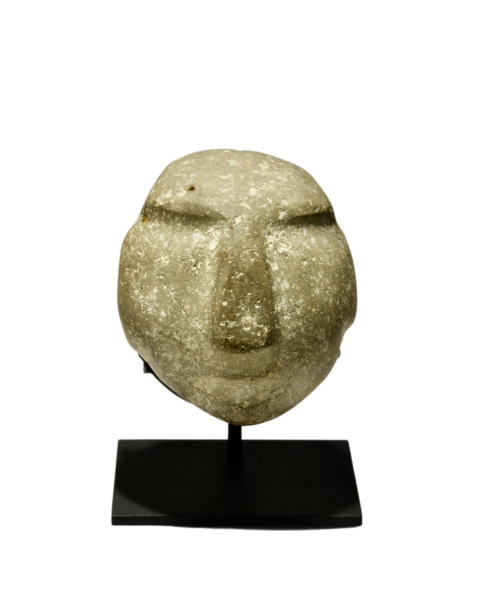
Mezcala Stone Carved Face Mask or Ornament
Mezcala M-15 stone carved face mask with angular brows, a wide nose, a subtle mouth, and a rare “V” cut on top, showcasing minimalist ancient design.
More Info / Inquire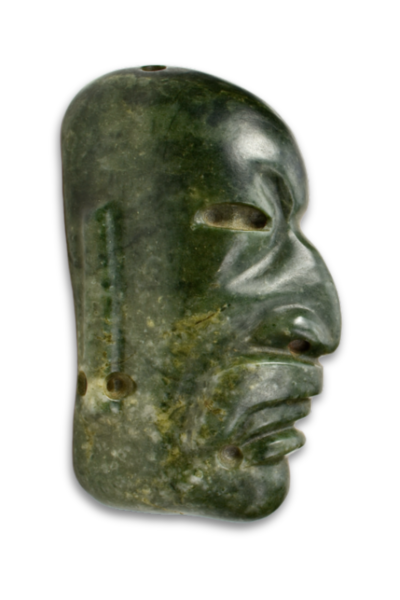
Amazing Olmec Jade Were-Jaguar Pendant
A remarkable were-jaguar artifact from the Olmec civilization is a Nephrite dark green jade pendant from the Middle Pre-classic Period, dating between 900-600
More Info / Inquire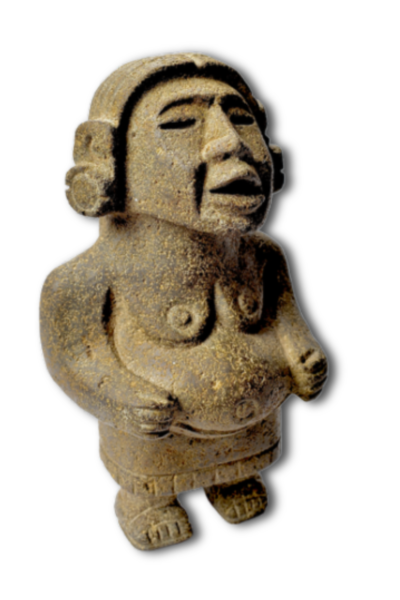
Aztec Stone Toci Figure
Explore this exquisite Aztec stone figure of Toci. This finely sculpted votive piece captures Toci in an unusual standing position. The details of her intricate
More Info / Inquire