Precolumbian Art - South America
South America includes Colombia, Venezuela, Ecuador, Peru, Bolivia, and Argentina
In pre-Columbian Colombia, the principal archaeological cultural phases are Calima, Sinu, Chibcha, Quimbaya, San Agustin, Tairona, Cauca, Nariño, Muisca, Tumaco, and Inca.
In Pre-Columbian Ecuador, the principal archaeological cultural phases include Las Vegas, Valdivia, Machalilla, Cotocollao, Chorrera, Narrio, La Tolita, Guangala, Jamacoaque, Jambeli, Capuli, Bahia, Puruha, Cuasmal, Manteno, Huancavilca, Milagro – Quevedo, Atacames, Canari, and Inca.
In Pre-Columbian Peru, the principal archaeological cultural phases are Chavin, Huari/Wari, Paracas, Vicus, Recuay, Nazca, Salinar, Mochica/Moche, Tiahuanaco/Tiwanaku, Chimu, Ica, Chancay, and Inca.
In Pre-Columbian Bolivia, the principal archaeological cultural phases are Chiripa, Yaya-Mama, Tiahuanaco/Tiwanaku, Huari/Wari, Moxos, and Inca.
In pre-Columbian Argentina, the principal archaeological cultural phase is Condorhuasi-Alamito.
Within this expanse of South American history, visitors will find a fascinating display of Pre-Columbian artistry. The collection will feature pottery that showcases intricate sculptured designs and practical forms, stone artifacts carved with symbolic meanings and used for ceremonial or everyday purposes, metal implements, and wooden pieces that highlight the craftsmanship and resourcefulness of the ancient inhabitants. Additionally, textile works will be displayed, revealing the complex weaving techniques and vibrant patterns that convey cultural identity and tradition. This rich array of artifacts aims to immerse viewers in the depth of South America’s cultural heritage, celebrating the artistry and enduring legacy of its ancient civilizations.
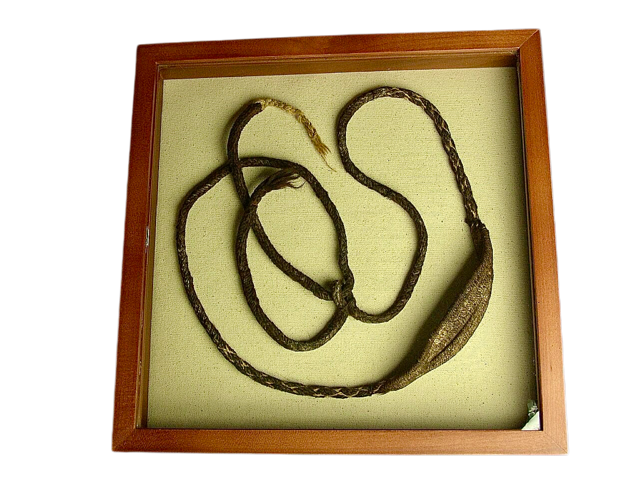
Inca Warriors Sling (Huaraca-Waraka)
This unique battle sling was well constructed. It was made of twisted human hair and braided with Llama wool. One could speculate the reason for choosing...
More Info / Inquire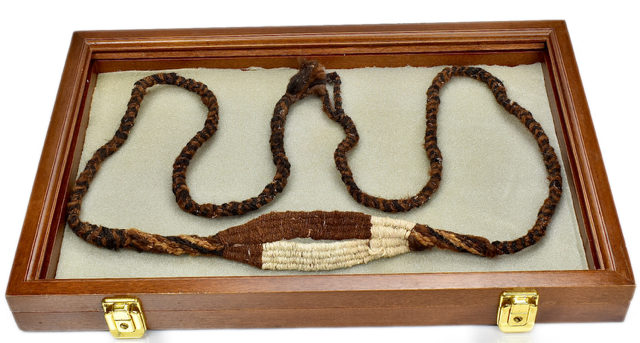
Inca Warriors Sling (Huaraca/Waraka)
This is a battle sling from the Inca culture c. 1400s. Made of braided Llama wool. The brown and tan colored center cradle/pouch has a slit to secure the stone
More Info / Inquire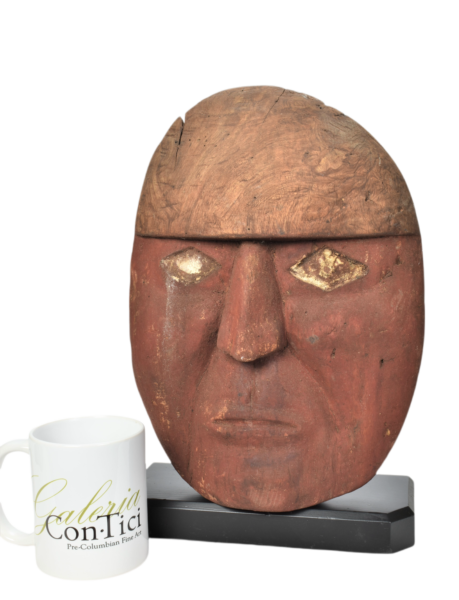
Chancay Mummy Bundle Mask
An excellent, robust Chancay Mummy Bundle Mask. Made from the Alder tree with uniformly applied gritty red cinnabar. Red is the color of the east, the rising...
More Info / Inquire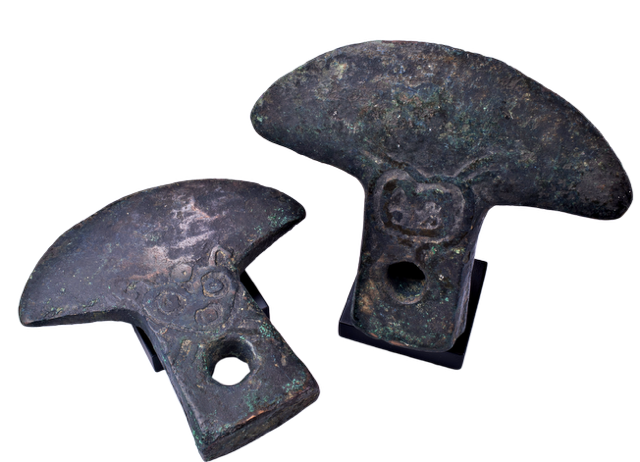
Inca Bronze Axe Blades with Owl Insignia
A set of two large and heavy Inca Bronze Axes with the sacred Owl "Tuco" insignia - Rare Casted bronze with a half-moon-shaped blade.
More Info / Inquire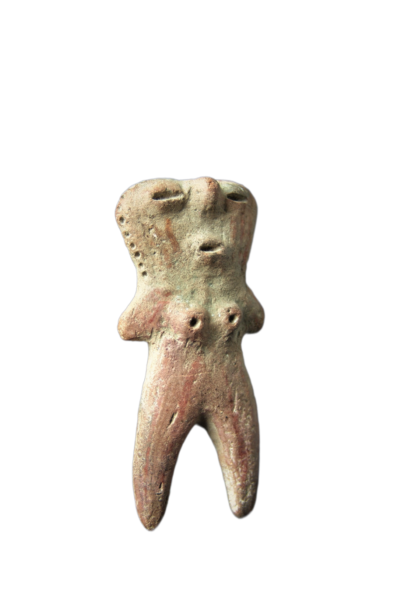
Valdivian – Machalilla “Venus” Figurine
A solid Venus figurine from the Machalilla culture, Ecuador. Supersedes in form, the modeled figurines of terminal Valdivian “Venus” types: coffee bean eyes...
More Info / Inquire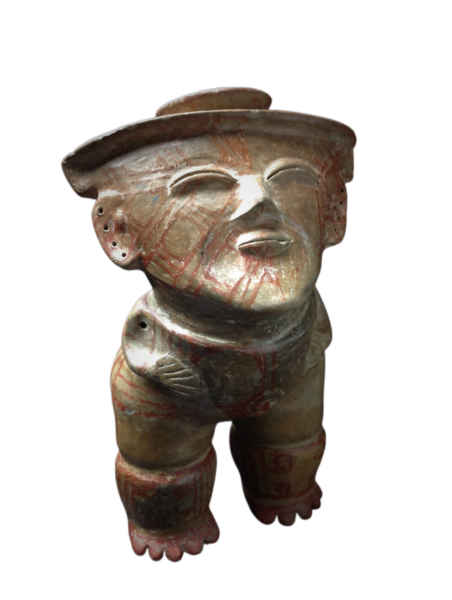
Machalilla Effigy Vessel
The Machalilla culture was an ancient civilization that thrived on the Ecuadorian coast from around 2000 BCE to 800 CE. They are known for their advanced...
More Info / Inquire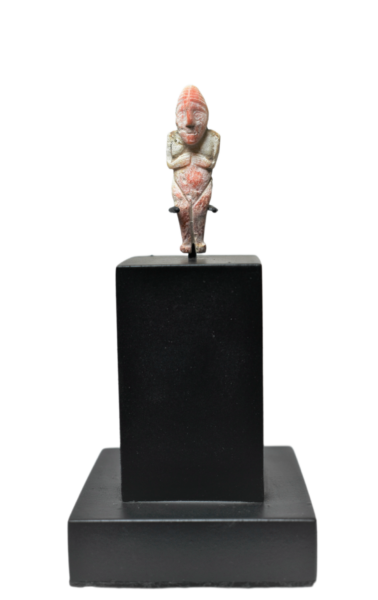
Inca Capacocha Spondylus Miniature Effigy
A charming miniature Capacocha female effigy. They were made from the cherished orange Spondylus shell. They would have been covered in clothing...
More Info / Inquire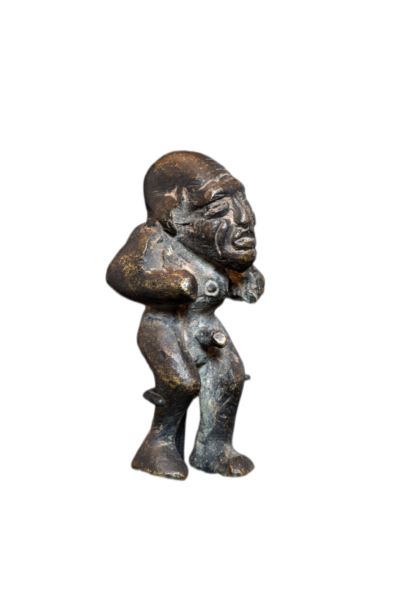
Inca Hunchback Miniature Figurine
Highly deformed nude hunchback figurine in Bronze. His facial features are remarkable-expressive and detailed Capacocha offering. Hunchbacks were seen as...
More Info / Inquire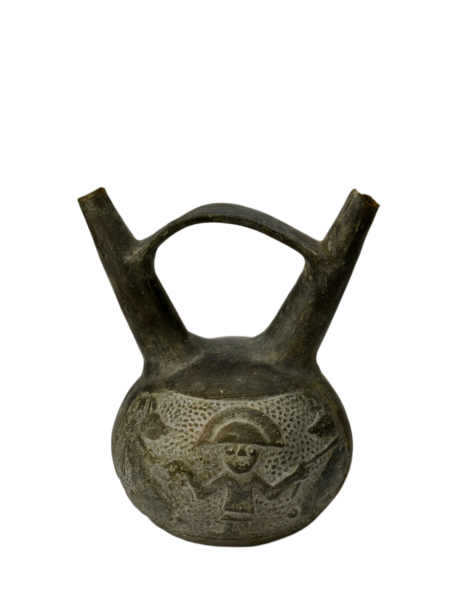
Chimú Blackware Double Stirrup Vessel
This is a lovely Chimú black-ware mold-made double stirrup vessel with a bridge handle. The body has decorations and features a crescent headdress figure...
More Info / Inquire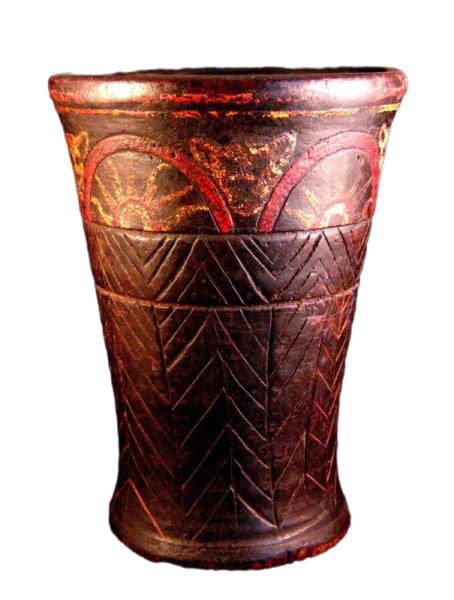
Classic Jaguar Inca Kero
In Inca culture, jaguars symbolized strength and power, often depicted in various art forms, including the iconic Inca kero vessels. These jaguars were not...
More Info / Inquire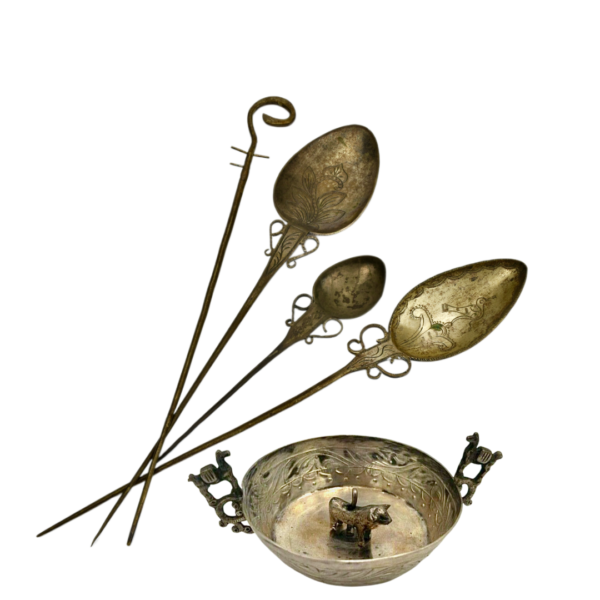
Aymara/Spanish Colonial Silver Ceremonial Set
Rare Aymara/Spanish Colonial silver ceremonial set, including a finely crafted bowl with a central ox and leaf motifs, alongside elaborately designed Tupus,
More Info / Inquire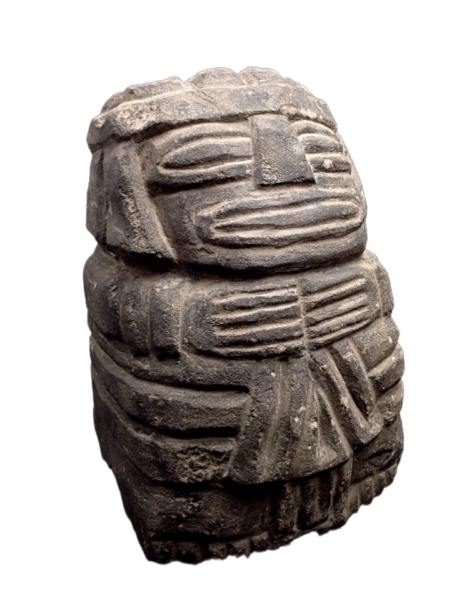
Tiwanaku Stone Idol c. 1050 A.D.
A fine Tiwanaku sandstone idol. The body is stout with deeply incised quadratic face and body features. Hands are held at the center and high.
More Info / Inquire